
See how ADDIE is driving digital transformation across industries with specialized solutions.

Discover ADDIE's expertise in delivering cutting-edge technology services tailored to your needs.

Explore ADDIE's off-the-shelf tech products designed for efficiency and scalability.

Stay ahead with expert insights, case studies, and thought leadership from ADDIE.
See how ADDIE is driving digital transformation across industries with specialized solutions.

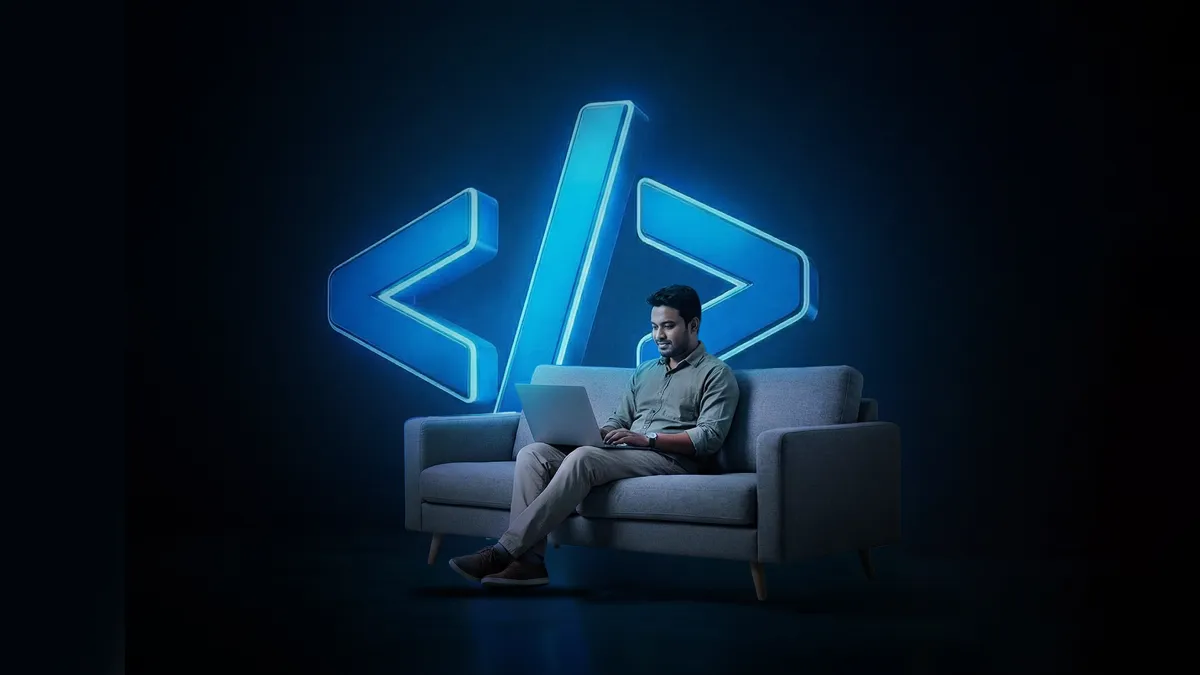
Why Enterprises Are Moving Back to Custom Software in 2026

Written By
-
Updated Date
-
Published Date
04 February, 2026
For years, the narrative was simple: buy software, move fast, scale later.
SaaS tools promised faster deployment, lower upfront costs, and reduced engineering effort. And for a while, it worked.
Until it didn’t.
Today, enterprises across industries are re-evaluating that decision — not out of nostalgia, but necessity. In 2026, custom software is no longer viewed as expensive or slow. It’s viewed as strategic.
The SaaS Plateau
Off-the-shelf platforms excel at solving generic problems. But as organizations grow, their needs stop being generic.
What begins as convenience often evolves into compromise:
Workflows adjusted to fit software limitations
Critical integrations held together by brittle APIs
Rising licensing costs tied directly to growth
Data scattered across disconnected systems
Eventually, businesses hit a ceiling — not because they lack ambition, but because their tools were never designed to scale with them.
The Cost of Flexibility Loss
The hidden cost of off-the-shelf software is not financial alone. It’s strategic.
When product roadmaps are dictated by vendors, organizations lose control over:
How fast they can innovate
How securely they can operate
How deeply systems can integrate
How data can be leveraged
In highly competitive markets, this loss of flexibility becomes a liability.
Custom software reverses this dynamic. Instead of adapting the business to software, the software adapts to the business — continuously.
Architecture Over Features
One of the biggest misconceptions about custom software is that it’s about features. It’s not.
It’s about architecture.
Modern custom platforms are built with:
Modular, scalable system design
Security embedded at the foundation
Performance tuned for real-world usage
Clear ownership of data and logic
This architectural control allows enterprises to grow without replatforming every few years.
AI, Automation, and the Limits of Generic Tools
As AI and automation move from experimentation to core operations, many enterprises are discovering a harsh truth: generic tools don’t adapt well to intelligent systems.
AI thrives on:
Clean, structured data
Predictable workflows
Deep system integration
Custom software provides the environment AI needs to deliver real value — not just surface-level automation.
Trust as a Competitive Advantage
In 2026, trust is no longer a soft concept. It’s measurable.
Reliable systems.
Accurate data.
Secure platforms.
Predictable performance.
Custom software enables enterprises to design trust into their systems instead of relying on vendor assurances.
When leaders trust their systems, decisions move faster. When teams trust their tools, adoption follows naturally.
The Return to Ownership
Perhaps the most important shift driving the return to custom software is ownership.
Ownership of:
Roadmaps
Data
Security posture
Long-term cost structure
Enterprises are realizing that long-term efficiency doesn’t come from shortcuts — it comes from systems built with intention.
Final Thought
Custom software is not a step backward.
It’s a step toward maturity.
Enterprises that treat software as infrastructure — not a quick fix — are the ones building platforms that last, scale, and adapt to change.
In an era where technology defines competitiveness, owning your foundation is no longer optional.
It’s essential.




More Blogs


















USA Office
501 Silverside
Road, Suit 105 #4987,
Wilmington, DE 19809, USA

UK Office
ADDIE Soft (UK) Ltd 71-75 Shelton St, Covent Garden, London, WC2H 9JQ

Bangladesh
27 Shaptak Square, Level-12, Plot-2 (Old-380), Road-16 (Old-27), Dhanmondi, Dhaka - 1209
Shyamoli Square (Level-7), Plot #23/8-B, Block-B, Bir Uttam A.N.M. Nuruzzaman Sharak, Mirpur Road, Dhaka-1207


